
"coffee leaf rust"
500 article(s) found

Price characteristics and Flavor description of Arabica Coffee introduction of varieties produced by taste treatment
Arabica Coffee Price characteristics Flavor description Taste treatment method varieties of Arabica Coffee (scientific name Arabica coffee). Originated in Ethiopia (such as Ethiopia) Abyssinia Plateau (present-day Ethiopian Plateau) Arabica species, initially mainly used as medicinal food, after the Arab world was introduced into Europe, cultivate the habit of drinking and baking thirteen

What are the three native species of coffee beans? 2016 the latest coffee information
There are about 40 species of coffee plants in the three native species of coffee, but the only ones that can produce coffee beans of commercial value are Arabica, Robusta and Liberian. these three species are called the three original species of coffee. 1. The origin of the Arabica species (scientific name Coffea arabica) is the Abyssinia Plateau of Ethiopia (present-day Ethiopia).

Prevention and control of coffee rust is the main disease of coffee.
1. Coffee rust is the main disease of coffee, the most harmful, the damaged plants, light reduced yield, serious death. Coffee rust is mainly harmful to leaves and sometimes to young fruits and twigs. After the leaves were infected, many light yellow spots appeared at first and enlarged in the form of water stains, followed by orange-yellow powdery spores on the back of the leaves, and there was a light green halo around the disease spots, which gradually expanded or connected in the later stage.

How much is Arabica coffee? how do you drink it?
Arabica coffee how much money how to drink "Typica" tin card, the name sounds majestic, but in fact it is not so strong it has a weak physique, poor disease resistance, easy to catch rust leaf disease, and produces less fruit. It is one of the oldest native varieties in Ethiopia, and many Arabica are derived from iron pickups! The bronze color of the top leaf of the iron pickup is one of the characteristics, and the bean grain is better.
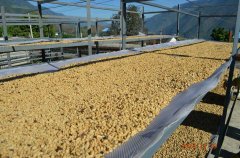
Coffee three native species Arabica species: Ethiopia 90+levelup Flower language Sunlight Sidama
Coffee belongs to Rubiaceae coffee evergreen shrubs, tropical regions as the center, about 500 genera 6000 species of Rubiaceae plants distributed in this. Coffee has long been considered to have certain medicinal effects, such as stomach, mind, hemostasis, heat dissipation, physical strength and so on. There are about 40 species of plants in the genus Coffea, but only Arabica, Robusta and Libby can produce coffee beans with commercial value.

The rapid growth rate of coffee is maintained by 2500000 coffee farmers around the world.
Since the 1960s, the total output of coffee in the world has increased by three times every year, and the demand has increased by 5% a year. Such a rapid growth rate is sustained by 2500000 coffee farmers around the world, and 80 to 90 percent of them are small coffee farmers, and their coffee belt is also the most significant climate change region in the world.

Introduction to the flavor and taste characteristics of Arabica coffee manor in Indonesia
West Africa, the origin of coffee grown in Liberia, has a strong adaptability to all kinds of environments, such as high or low temperature, humidity or dryness, except that it is not resistant to leaf rust and its flavor is worse than that of Arabica, so it is only traded or planted in some West African countries (Libya, C ô te d'Ivoire, etc.). Among the coffee in circulation in the world market, about

Introduction to the varieties and characteristics of Coffee beans
Typica, also known as Tippica, is the closest to the native species of Arabica, where almost all Arabica varieties originated. It was widely cultivated in Central and South America in the past, with long beans and excellent aroma and sour taste, but it is not resistant to leaf rust and requires a considerable number of shading trees, resulting in low production (same as bourbon, every two).

Vietnam Coffee producing areas Coffee varieties Coffee picking methods Coffee beans in three major producing areas two major species introduction
Vietnam Coffee Flavor description Vietnam (Vietnam) well-known representative coffee: Vietnam coffee Vietnam is also one of the top coffee producers in the world. At present, the vast majority of coffee trees in Vietnam are Robusta, because the leaf rust in the middle of the 19th century destroyed the Arabica coffee trees in Vietnam, and all of them were resistant to leaf rust.

Flavor description of Sumatra Coffee Manor Variety producing area by taste treatment
Sumatra Coffee Manor Flavor description Taste treatment Variety production region introduced that the prosperity of Indonesian coffee was not sustainable, coffee production was fatally hit at the end of the 18th century, and leaf rust, originally found in West Java, spread rapidly. destroyed the Arabica coffee estate in Indonesia. The leading position of the coffee trade was replaced by the American producing countries. But it's worth mentioning that this leaf rust

Yunnan Coffee varieties Yunnan small Grain Coffee Baking requirements Yunnan Katim brewing parameters and flavor characteristics
The method of brewing small grains of coffee-how to brew Yunnan small grains of coffee 1) you can use the kind of water used in household filter drinking fountains or filtered tap water. 2) Coffee beans / coffee powder; the water content of a cup of coffee in the siphon pot is 110ml (but the amount of water after cooking will be reduced by about 1/5), and the corresponding coffee powder is about 15g; if the conditions are available, it is best to choose the one within 10 days from the factory.
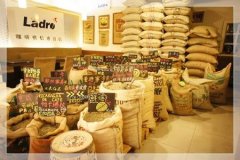
The cultivated varieties of Coffee Tree: small seed and large seed
3. Cultivated varieties (1) small seed species (2) large grain species Coffea belongs to Rubiaceae, Coffea belongs to perennial evergreen shrubs or small trees, there are about 90 species. At present, there are small seed species (Arabian species), medium grain species (Gaffra species) and large grain species (Liberian species) cultivated in Hainan. (1) small seed species: also known as Arabian species, native to Ethiopia, evergreen shrubs. The plant is small, 4cm high and 5m high
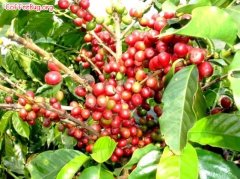
The basic knowledge of coffee beans The three original species of coffee
Coffee belongs to the evergreen shrubs of the genus Coffee of Rubiaceae, centered in tropical regions, with about 500 genera and 6000 species of Rubiaceae plants distributed here. Coffee has long been thought to have certain medicinal effects, such as invigorating stomach, refreshing mind, stopping bleeding, dissipating heat, strengthening body, etc. More famous Rubiaceae plants and gardenia, its fruit has long been dried as medicine

Liberian coffee beans-types of Italian coffee
Liberian coffee beans-Italian coffee species Liberian species (coffea liberica) do not want to go into detail here, because his trading scope is very small, usually not used, what we are talking about is not very often, so let's briefly describe it here. Liberian coffee originates in West Africa and is suitable for all kinds of rings, whether high or low, wet or dry.

Hawaii kona Kona coffee brewing method Hawaiian coffee Kona coffee powder how to drink
Professional coffee knowledge exchange more coffee bean information please follow the coffee workshop (Wechat official account cafe_style) about Kona, coffee drinkers have heard of his acidity and rich fruit acid characteristics, but that term can only represent the coffee beans produced in the state of Hawaii, their quality and taste vary greatly between different products, there is no way to accurately describe it, because
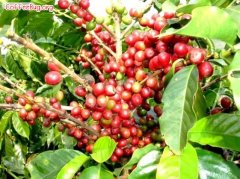
The basics of coffee beans the three native species of coffee
Coffee belongs to the evergreen shrub of the genus Rubiaceae, which is centered in the tropics. There are about 6000 species of Rubiaceae belonging to 500 genera. Coffee has always been thought to have certain effects, such as strengthening the stomach, waking up the brain, stopping bleeding, dissipating heat, strengthening the body, and so on. The more famous Rubiaceae plant is Gardenia jasminoides, whose fruit was dried and used as medicinal material a long time ago. The three native species of coffee

Liberian caffeine content-caffeine content of a cup of coffee
Caffeine content of Liberian species-caffeine content of one cup of coffee (Coffealiberica). West Africa is the origin of Liberian coffee, no matter high or low temperature, humidity or dryness, it has strong adaptability, but it is not resistant to leaf rust and has worse flavor than Arabica robusta species, scientific name coffee RobustaLind.
Honduran Coffee Variety Introduction Honduran Coffee Bean Flavor New Generation Fruit Flavor
Professional coffee knowledge exchange More coffee bean information Please pay attention to coffee workshop (Weixin Official Accounts cafe_style) Front Street-Honduras coffee cultivation in Honduras, the earliest can be traced back to 1804, from Costa Rica to Honduras Olancho region, most of the cultivation by the Spanish colonists at that time owned, Honduras after independence, several consecutive terms

The basic knowledge of Coffee beans Coffee beans are the three native species of coffee
Coffee belongs to the evergreen shrub of the genus Rubiaceae, which is centered in the tropics. There are about 6000 species of Rubiaceae belonging to 500 genera. Coffee has always been thought to have certain effects, such as strengthening the stomach, waking up the brain, stopping bleeding, dissipating heat, strengthening the body, and so on. The more famous Rubiaceae plant is Gardenia jasminoides, whose fruit was dried and used as medicinal material a long time ago. The three native species of coffee

The three native species of coffee, the main varieties of Colombian coffee.
Varieties resistant to leaf rust found in Congo, Africa, teach Arabica species to be more resistant to the disease. People like to compare the robusta species to the Arabica species of coffee. In fact, the robusta species was originally a mutant of the Congolese species (scientific name Cofffea canephora), so it is the Congolese species that should be compared with the Arabica species. To this day, however, Robusta species